

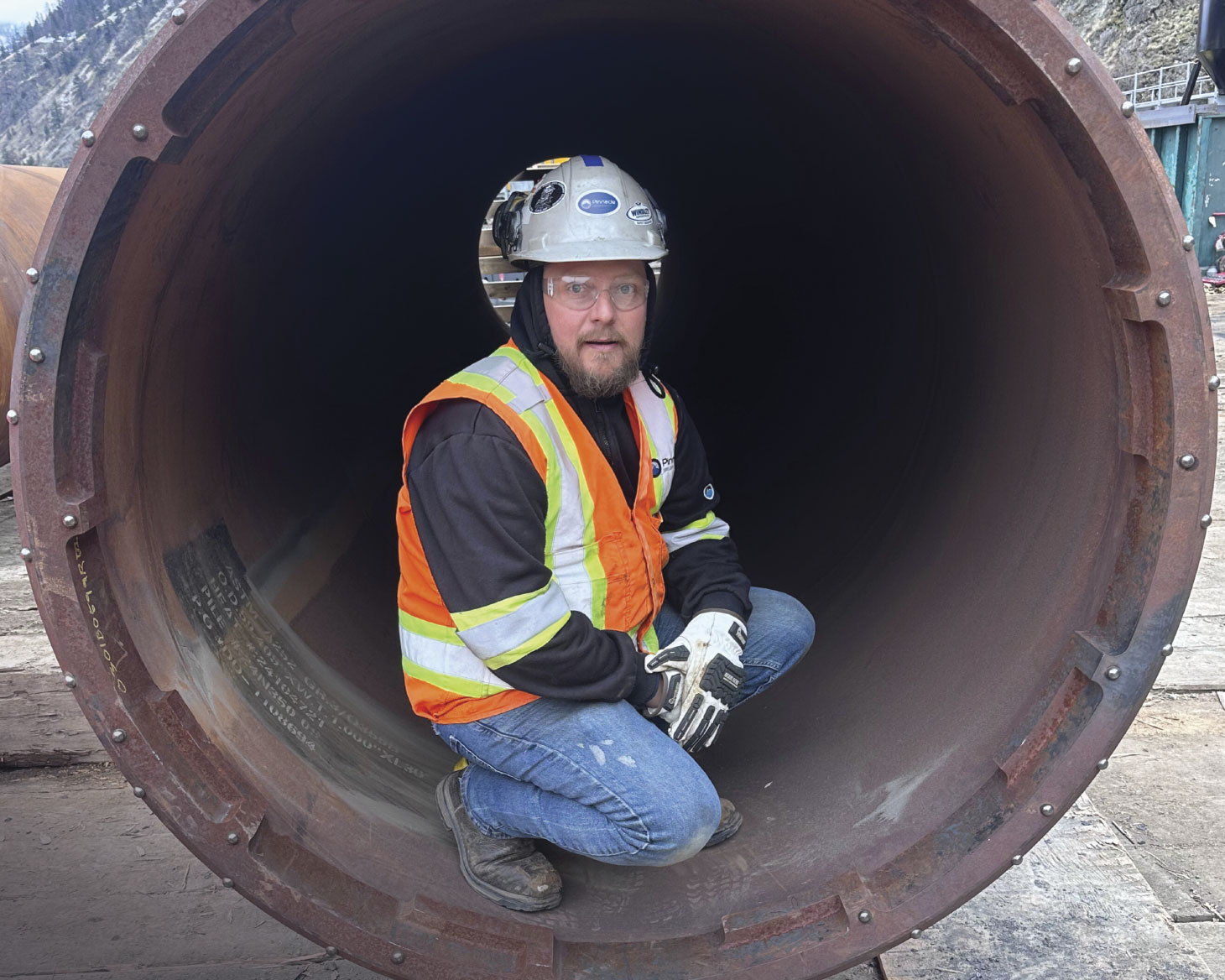
Ask any expert in the deep foundation industry, and they will tell you that casing advancement systems (CAS) are improving drilling performance, safety and project outcomes across Canada’s deep foundation sector.
CAS allow contractors to drill through challenging ground conditions, minimize risk and maintain productivity while also addressing environmental and engineering constraints. By combining technical insight with field examples, it is evident that innovations in casing advancement are transforming deep foundation work from coast to coast.
Pinnacle Drilling Products is a Canadian manufacturer and distributor driving the adoption of these technologies. The company manufactures drilling products that optimize casing advancement drilling methods, which include everything from the top drive down to the bit. The company designs and manufactures reverse circulation (RC) conversion kits that allow contractors to use their existing rotary Kelly rigs with an RC system. The conversion kit will connect to the optimal-size internally manufactured RC pipe and interchange, then to the rest of the drill string, including the shock absorber, hammer, pilot bit and ring bits.
“By understanding all the drilling parameters, we can ensure we adequately plan and design a system that will optimize the drilling efficiency to safely achieve a successful project outcome for the customer.”
Mitch Yorston, Pinnacle Drilling Products
“There is borehole collapse, washout from groundwater pressure, stuck tooling and sudden water inflow that can contribute to the challenges faced by drilling contractors. Other factors include the limitation of existing equipment in their fleet, where specialized rigs and casing systems are needed to efficiently drill through the unstable ground conditions,” said Mitch Yorston, Pinnacle Drilling Products’ technical sales lead.
He says casing advancement systems are changing the way those challenges are managed, as the casing acts as a borehole stabilizer, preventing water from entering the drilled shaft. This allows the operator to drill faster without encountering significant issues introduced by ground instability. “The benefits include reducing delays and reliance on heavy drilling fluid additives, translating into more efficient operations, while saving money, enhancing safety and minimizing the environmental impact.”
Yorston says that by advancing the casing and the drill bit simultaneously, the operator can minimize fluid loss and ground disturbance while drilling through any ground conditions, including overburden, boulders and competent rock. “We specialize in combining the casing advancement system with our internally manufactured reverse circulation drilling products. By using this air-lift system, the cuttings are forced up the inner tube, maintaining the integrity of the borehole walls. This methodology allows for faster and deeper drilling and is critical for maintaining uphole velocity in large diameter piles for effectively removing the cuttings from the borehole.”
Many improvements
Specific improvements that contractors are seeing onsite include increased drilling speed, the ability to maintain a clean, vertically drilled borehole, safer drilling operations, environmental benefits from the elimination of heavy drilling fluids and the versatility to drill in all ground formations. As technology continues to evolve, it allows greater modularity with sacrificial ring bits, replaceable wings for overburden systems and enhanced wear plates for abrasive ground conditions.
“In foundation drilling, the pile size continues to get larger, which can now be drilled using a mono hammer in most applications, rather than a cluster drill that requires a significant amount of maintenance and has significant limitations when not drilling in competent rock,” said Yorston.
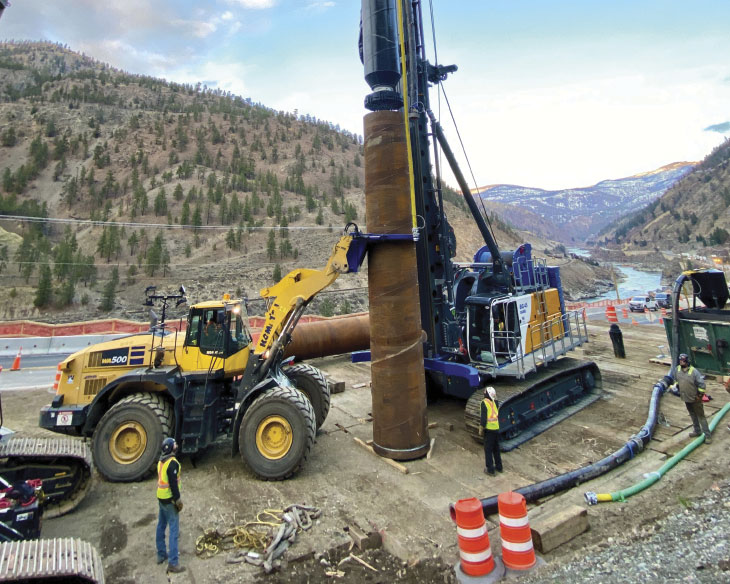
He says essentially any project where borehole integrity and ground stability are questionable would benefit from CAS. “These include foundation drilling, tunnelling, utility projects, water wells and slope stabilization, to name a few,” he said. “[CAS] are being widely used by most contractors across Canada and the U.S. in the foundation and piling markets, particularly where there are difficult, hard rock conditions.”
While the benefits are clear, there are still barriers, such as cost, training and awareness, that prevent wider adoption. “Unless a contractor is regularly executing drilling operations in challenging overburden or collapsing formations, it may be difficult to justify the investment in hammers, pilot bits, ring bits and underreamer systems. These specialized products are generally more expensive than conventional drilling tools,” said Yorston.
Operators also require specialized training to drill efficiently, as improper use can lead to poor drilling performance or even damage to tools and equipment. However, they can be trained quite easily in a short time, which is a great advantage for the CAS.
Climate, geology and regulations
It is no surprise that Canadian conditions, such as climate, geology and regulations, influence design and innovation. When designing drill tooling for Canada’s climate, the CAS team must consider the material resilience and durability for deployment in extreme heat, such as geothermal applications, and in extreme cold, such as frozen ground conditions and permafrost.
“The geology in Canada is also challenging due to complex subsurface lithologies, including loose gravel, fractured rock, crossflow of fluids at different temperatures and hard bedrock,” said Yorston. “This geology requires a borehole assembly that can drill through the different layers, which is where [CAS] proves to be successful.”
“[Contractors] often budget for several days of drilling per pile – while drilling to the desired depth in just hours.”
Mitch Yorston, Pinnacle Drilling Products
Before designing CAS for its customers, the team takes time to consult with them about their challenges and desired outcomes. “By understanding all the drilling parameters, we can ensure that we adequately plan and design a system that will optimize the drilling efficiency to safely achieve a successful project outcome for the customer,” said Yorston.
The company recently designed a CAS using RC for drilling 1,500-millimetre outside diameter cased pilings to support a bridge foundation, where drilling conditions were very challenging. The lithology included drilling through overburden, drilling a rock socket for embedding the casing, then continuing with a drill-through system to the desired depth in the bedrock using a large mono hammer. In setting up this operation, Pinnacle converted a large piling rig using its RC conversion kit, allowing the customer to use their existing rotary drill to execute the project successfully.
Yorston says that even with the country’s strict environmental and safety regulations, the CAS is often the optimal choice for drilling methodologies. “The casing prevents contamination between aquifers, while the Pinnacle RC cyclone is used to capture drill cuttings so they do not project in the air,” he said. “When considering safety, the casing integrity avoids leaks and potential blowouts, while ensuring ground stability.”
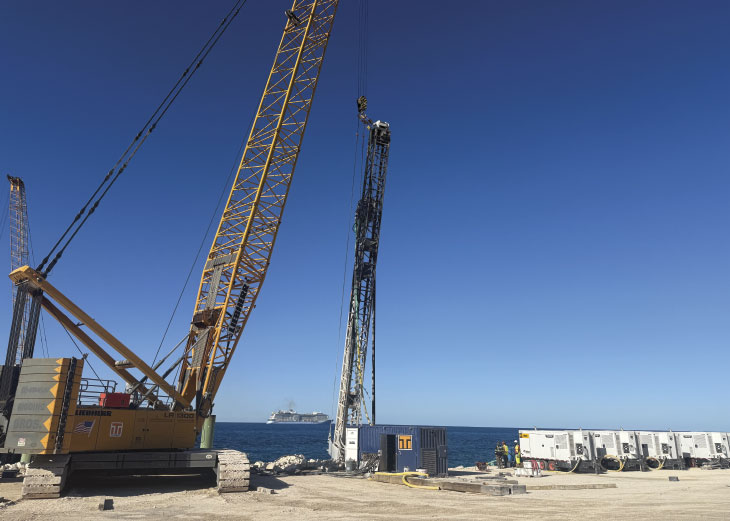
Yorston says contractors are commenting on how impressed and surprised they are by the drilling speed. “They often budget for several days of drilling per pile – while drilling to the desired depth in just hours,” he said. “Not to say that issues do not arise, as at the end of the day, drilling is not for the faint of heart. We continue to communicate with our customers when drilling a project in expected challenging conditions, often helping to commission and support them at the drill site. The feedback and firsthand observations are critical for enabling Pinnacle to continually improve the design of our products and the methodologies used to drill.”
Yorston also says the engineered design of the pilings is getting larger and deeper over time. “This requires further investment in R&D to ensure that the borehole assembly can successfully drill in these conditions. We’re also seeing the hammers needing higher piston weights and mono hammers getting larger to accommodate this evolution.”
The company also expects to see a broader adoption of the CAS methods in tunnelling, geothermal and water-well drilling, driven by efficiency and sustainability demands. “We could see the use of robotics and automation to improve manufacturing precision, while helping to reduce lead times in manufacturing production. The use of stronger and more sustainable materials, which are more heat- and corrosion-resistant, will continue to play a big role in ensuring that the casing advancement systems can hold up to the ever-challenging drilling conditions.”