

There is nothing abstract about safety on a deep foundations project. It is not theoretical. It is not a policy document. And it is not solved by adding another checklist to a binder. It is physical, immediate and unforgiving.
Safety in deep foundations is often discussed in broad terms such as programs, policies and procedures. But risk is tied to specific activities: drilling into the ground, lifting heavy materials, working around equipment and managing energy sources – each with specific particularities. The Canadian Construction Safety Council (CCSC) is bringing clarity to this reality through its “Critical Risks Guideline,” a framework that identifies 13 categories of work with the highest potential to result in serious injury or fatality.
As the guideline states, these are risks that, “if not safely executed, [have] the potential … to seriously harm or kill someone.” For contractors, many of these risks are not occasional – they are part of daily operations.
From general safety to critical risk focus
The guideline introduces a key distinction that not all hazards carry the same consequence. A critical risk is defined as one that “has the potential to cause a [serious injury or fatality] accident.” This framing shifts attention toward the relatively small number of activities that account for the most severe outcomes.
For deep foundations work, several of these categories are particularly relevant:
- Ground disturbance and excavation
- Hoisting and rigging
- Working around mobile equipment
- Energy isolation
- Working at heights
Each represents a routine part of project execution. Each also carries a well-documented set of controls. The implication is that reducing serious incidents depends less on identifying new hazards and more on consistently managing known ones.
Ground disturbance: planning below the surface
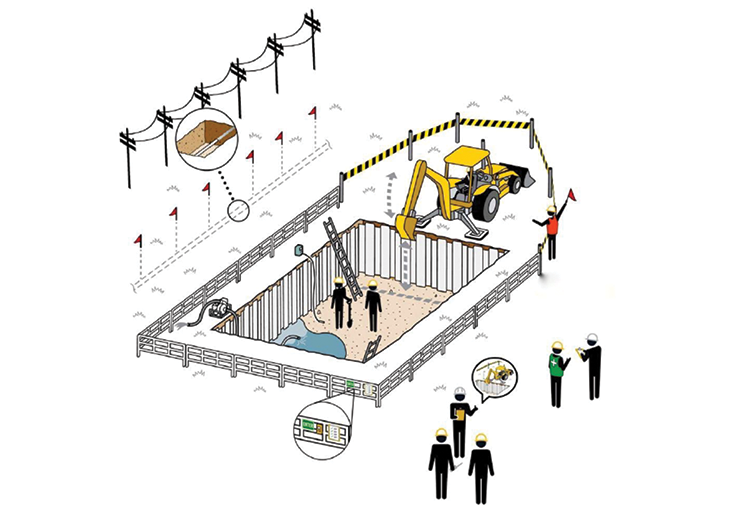
Few activities are more central to deep foundations than ground disturbance. The guideline defines it as “any work that results in a disturbance of the earth, or that results in a reduction of the initial installation cover over a buried facility.” The associated risks include utility strikes, ground instability, trench collapse and unexpected conditions.
To address these risks, the guideline outlines several core safeguards, including:
- Notification, location and marking of underground utilities
- Development of an excavation plan
- Use of protective systems such as sloping, shoring or trench boxes
- Ongoing monitoring of changing conditions
It also emphasizes authorization and verification before work begins. Contractors must ensure they “obtain authorization prior to performing excavation/trenching/ground.” In practice, incidents in this category are often linked not to a lack of procedures, but to incomplete information or deviations from planned controls once work is underway.
Mobile equipment: managing interaction and visibility
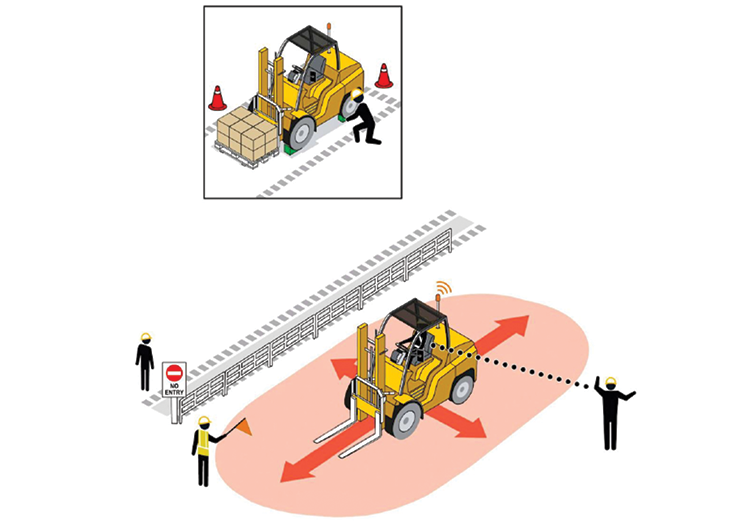
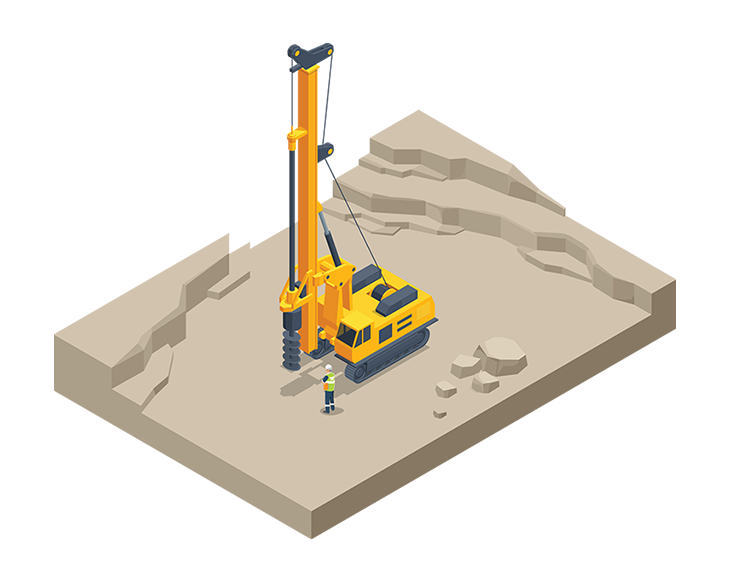
Working around heavy equipment is another critical risk category with direct relevance to piling operations. The guideline defines it as “any work where a person could potentially be struck by mobile equipment or its accessories.”
The controls are well established:
- Physical separation through barriers and defined exclusion zones
- Communication between operators and ground personnel
- Use of visibility and proximity detection systems
- Dedicated spotters when required
The guideline reinforces an essential principle: “See and be seen; maintain a safe distance.” On complex sites where multiple pieces of equipment operate simultaneously, maintaining that separation requires planning and consistent enforcement.
Hoisting and rigging: controlling the lift
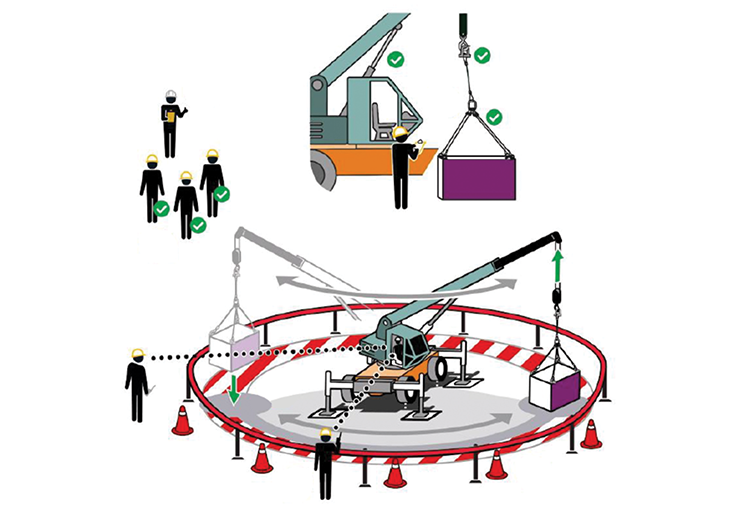
Lifting operations are integral to deep foundations work, whether placing casing, handling rebar cages or moving equipment. The CCSC identifies this as a critical risk category relating to “any work involving a lifting operation with a lifting device.”
The guideline emphasizes the importance of planning and co-ordination:
- Establishing and reviewing lift plans
- Inspecting equipment and rigging
- Defining exclusion zones
- Maintaining clear communication among crew members
One of the most fundamental safeguards is “I never walk under a suspended load” and “plan lifting operations and control the area.” In many cases, incidents occur when lifts deviate from plan or when site conditions change without corresponding adjustments to controls.
Energy isolation: verifying zero energy
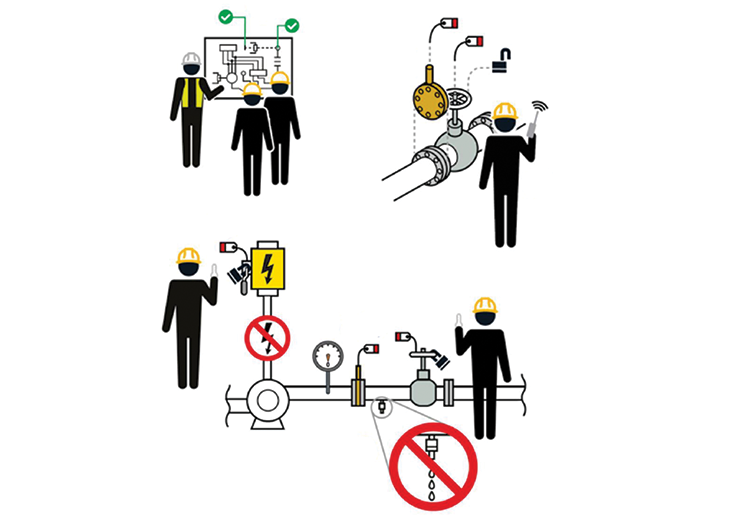
Energy isolation is often less visible but equally critical. It applies to work involving electrical, hydraulic, mechanical or pressurized systems. The guideline defines this category as exposure to hazards when working on or near energized systems.
The required safeguards follow a structured sequence:
- Identify all energy sources
- Isolate, lock and tag those sources
- Verify zero energy
- Confirm safe conditions before re-energizing
The guideline suggests contractors “confirm that hazardous energy sources have been isolated, locked and tagged,” and check that there is zero energy, and test the jobsite for residual or stored energy. Verification is a critical step. Without it, isolation measures may provide a false sense of security.
There is nothing abstract about safety on a deep foundations project.
Working at heights: maintaining basic controls
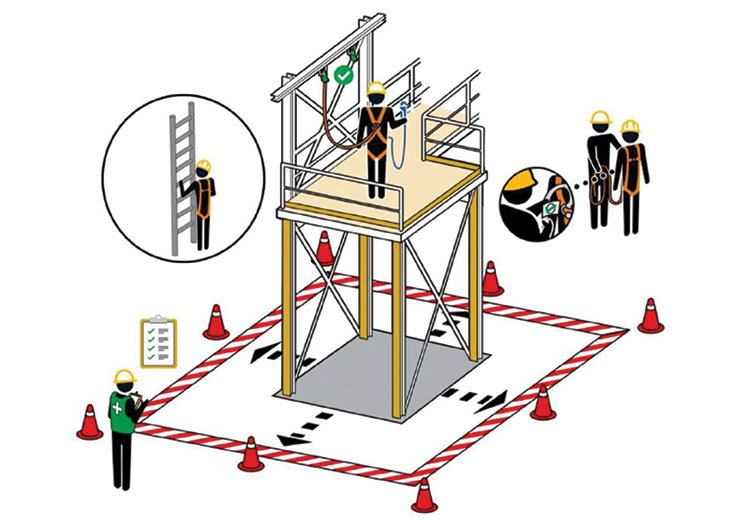
Working at heights remains one of the most common sources of serious injury in construction. The guideline defines it as “any work where a person could potentially fall and seriously injure themselves.”
The controls are well known:
- Use of fall protection systems
- Securing tools and materials
- Establishing rescue plans
- Maintaining tie-off requirements
The guideline reinforces the expectation: “protect yourself against a fall when working at heights.” While these controls are widely implemented, maintaining consistent compliance remains a challenge, particularly in dynamic work environments.
The role of Safe Start Checks
Across all critical risk categories, the guideline introduces Safe Start Checks as a consistent structure. These are not intended as administrative steps, but as verification points to confirm that safeguards are in place before work begins. The document repeatedly emphasizes workers “confirm these controls/safeguards are in place and verified prior to starting work.” This approach reflects a broader shift in safety management, from reacting to hazards as they arise, to ensuring that conditions are controlled in advance.
The guideline reinforces the expectation: “protect yourself against a fall when working at heights.”
For deep foundations contractors, the CCSC guideline does not introduce unfamiliar concepts. The risks and controls it outlines are already reflected in most safety programs. By identifying the activities most likely to result in serious injury or fatality, the guideline provides a basis for focusing resources, supervision and planning where they matter most.
This may include:
- Strengthening pre-task planning for ground disturbance and lifting operations
- Reinforcing exclusion zones and communication protocols around equipment
- Standardizing verification processes for energy isolation
- Ensuring consistent application of fall protection requirements
In each case, the goal is not to expand safety systems, but to ensure that critical controls are consistently applied.
A question of consistency
The CCSC’s work highlights the gap between defined procedures and field execution as a persistent issue in construction safety. The risks are known. The safeguards are documented. The challenge lies in applying those safeguards reliably, under changing conditions and production pressures.
For the deep foundations sector, where many of the highest-risk activities are inherent to the work, that consistency is essential. Because in these environments, safety outcomes are rarely determined by whether a risk exists, but by whether it is controlled before the work begins.