

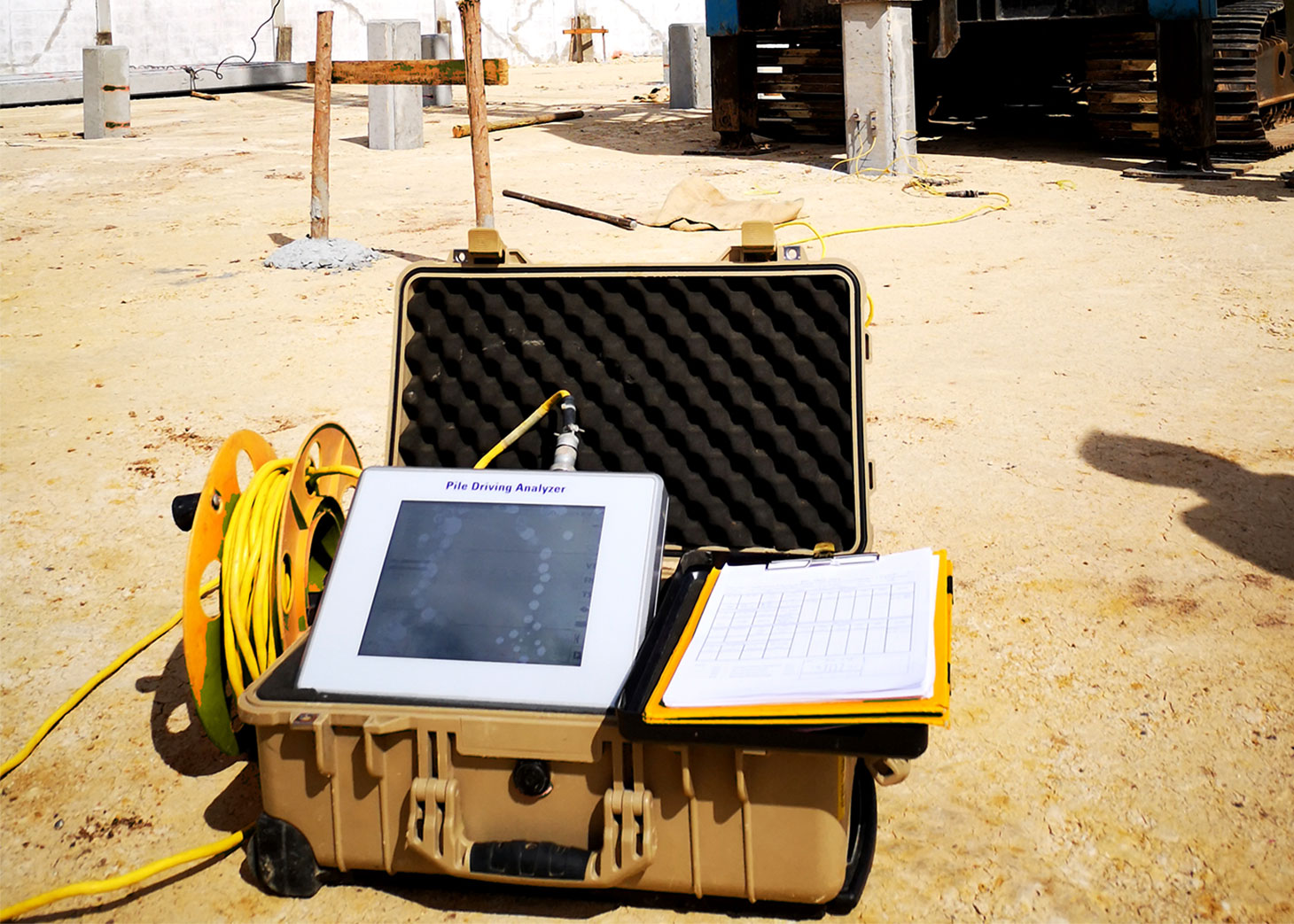
Ontario’s Ministry of Transportation (MTO) is moving to make high-strain dynamic testing using a Pile Driving Analyzer (PDA) the default method for controlling driven pile installation on its projects, replacing its longstanding reliance on the Hiley Dynamic Formula. Under the new approach outlined by MTO in July, a minimum of 10 per cent of driven piles will be subject to PDA testing. The Hiley formula will be permitted only on an exception basis, with approval from MTO’s Foundations Section.
MTO’s decision follows a comprehensive study conducted with EXP Services Inc. that examined installation and testing data from 299 piles at 34 sites between 1979 and 2022. The study compared the accuracy, consistency, reproducibility and efficiency of the two methods, using static pile load testing and empirical analysis methods as benchmarks. The study found that the Hiley formula could not consistently predict ultimate pile capacity with reasonable accuracy and repeatability. MTO concluded that PDA testing, combined with wave equation analysis and CAPWAP analysis, provides a more reliable approach to controlling pile installation.
Under the proposed policy changes, foundation investigation and design reports will include PDA testing recommendations and, where applicable, justification for using the Hiley formula. PDA testing will continue to be performed by the contract administrator or foundation engineering services provider.
The ministry presented the changes to the Association of Consulting Engineering Companies – Ontario on July 7, following a public consultation that closed May 13.