

As Canada pushes forward with major infrastructure, energy and trade corridor projects, the construction industry is confronting a growing challenge: there simply aren’t enough skilled workers to keep pace with demand. Across the sector, the gap between the labour needed and the labour available is widening, forcing companies to rethink how they recruit, train and retain the teams required to deliver the country’s most ambitious projects.
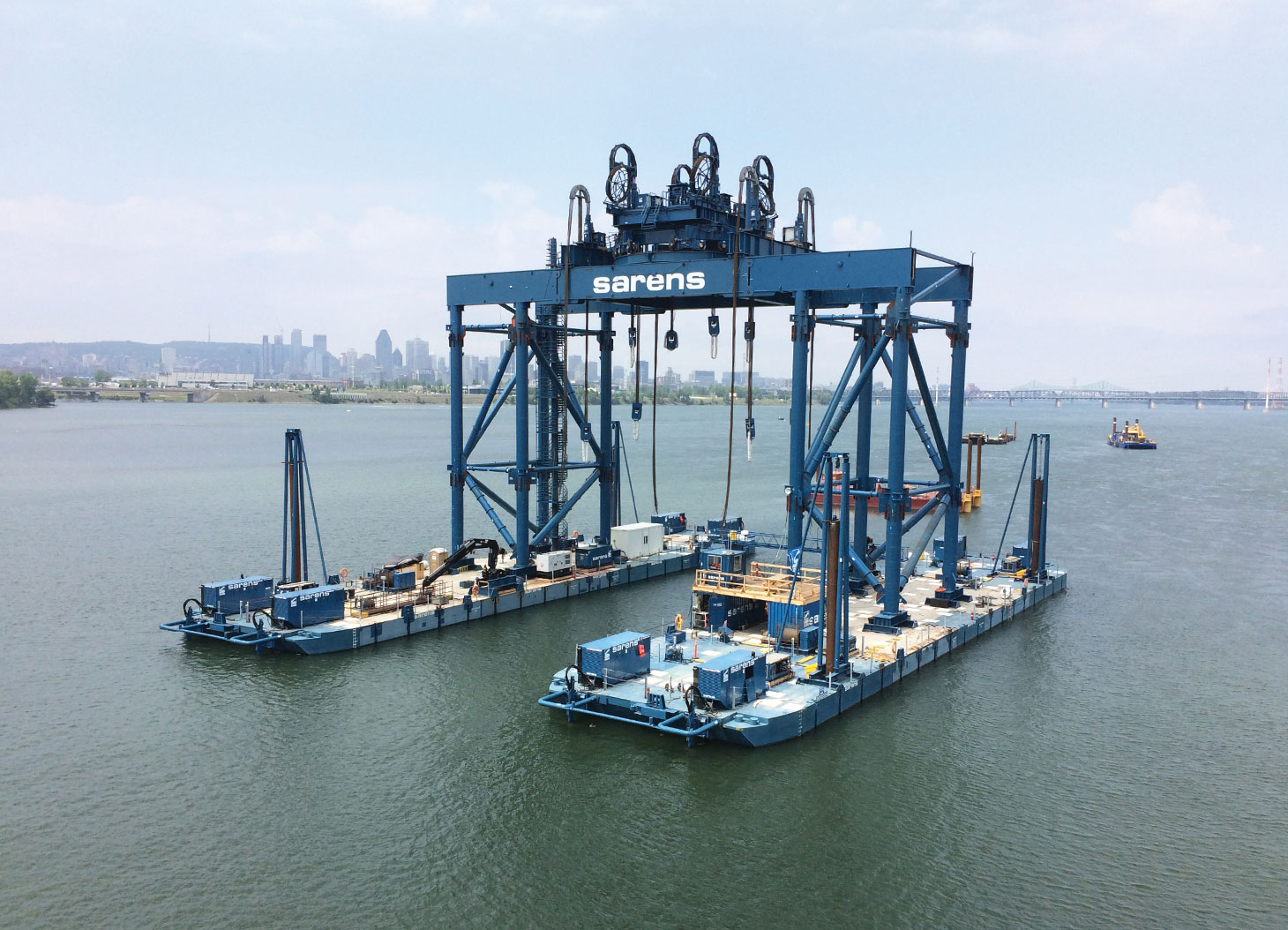
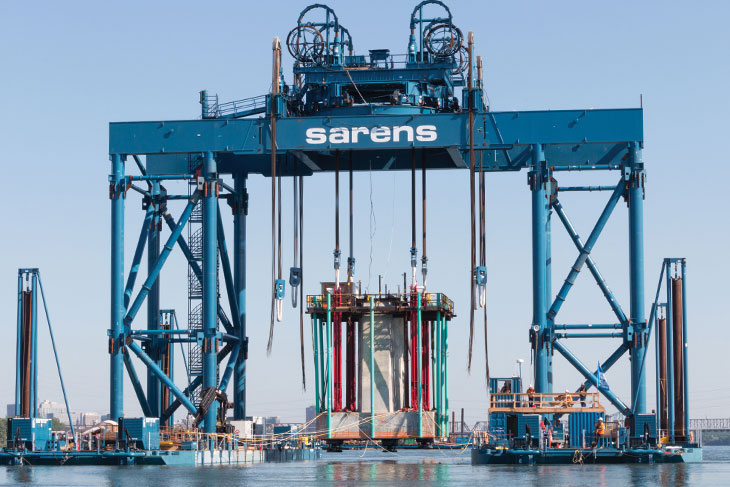
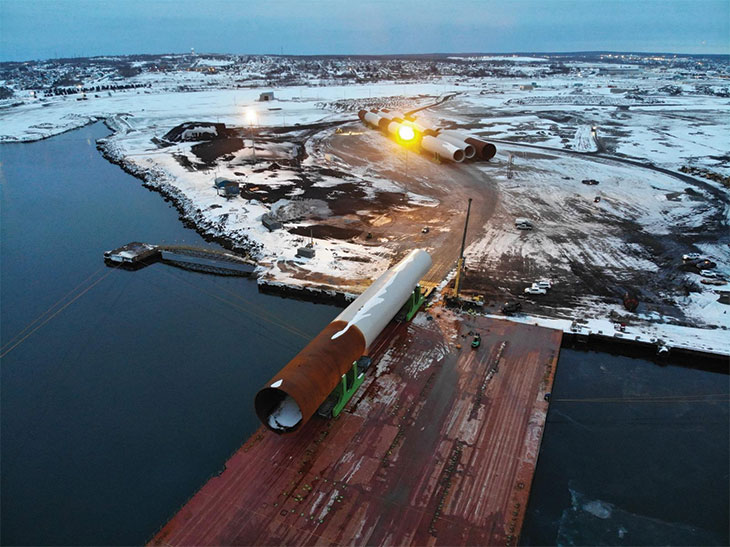
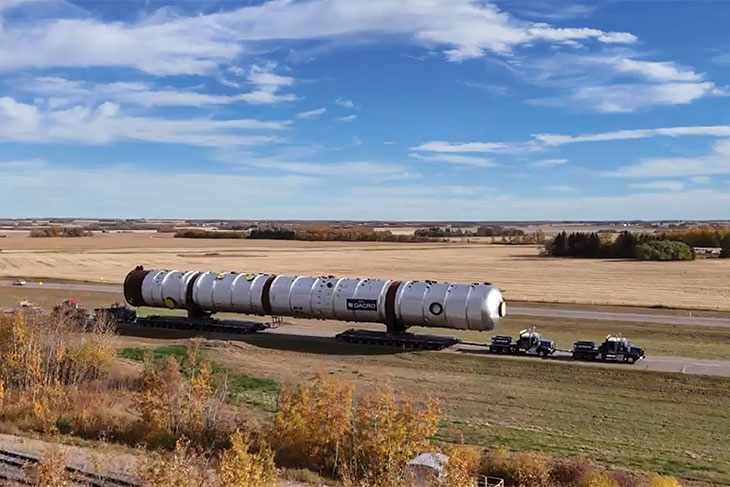
The strain is especially acute in heavy lifting, a segment that supports clients in oil and gas, nuclear, wind, renewables, petrochemicals and large-scale construction. Across these industries, project delivery has shifted sharply toward modular, project-oriented execution. Prefabrication now happens off-site, with final assembly at the project location, resulting in components and modules that are significantly larger, heavier and more complex to handle.
“This has increased the demands on not only the pure rental market but on the engineered project market as well,” said Thijs Lombaert, chief human resources officer at Sarens. “As a consequence, workforce demand next to the rental base is also becoming project-based and has required companies to rapidly mobilize specialized talent for defined project windows.”
With more than 6,500 employees, Sarens operates in crane rental, heavy lifting and engineered transport, pro viding a perspective on the workforce challenges facing companies working on increasingly complex projects.
“At Sarens, we maintain a stable core workforce to support our rental activities and operational continuity while complementing this with a flexible project workforce capable of responding to fluctuations in global project demand,” said Lombaert. “This balance between operational stability and project agility has become one of the defining workforce challenges of our industry today.”
Addressing the labour shortfall
Workforce disruption is far from a Canada-only issue. Around the world, labour availability is being squeezed by demographic and societal forces, including aging populations, fewer young people entering the labour market, declining interest in heavy-duty or blue-collar careers and historically low unemployment. At the same time, international mobility, often essential for highly specialized project work, has become increasingly complex to navigate.
There has also been a noticeable generational shift among new entrants to the workforce. For younger workers, outdated tools or analogue processes can be a turnoff for a generation raised on digital efficiency. This new generation also expects inclusive environments where their work matters, communication is open, feed back is encouraged and respect is non-negotiable. An increasing focus on work-life balance may also be shaping career preferences.
“While the industry can absolutely offer balance and rewarding careers, certain project environments and rental activities may require employees to spend extended periods away from home, which may not be as attractive for younger workers,” said Lombaert. “A lack of familiarity with the heavy lifting industry may also create misconceptions regarding safety and working conditions while, in fact, safety standards and operational professionalism within the sector have evolved tremendously over the years.”
These labour challenges are now affecting every stage of project execution, from scheduling flexibility to mobilization planning and long-term workforce fore casting. Companies that once competed primarily for projects now also find themselves competing for the qualified talent required to deliver those projects safely and reliably. Lombaert says the industry needs to place greater emphasis on developing talent rather than relying on experienced workers moving between companies.
“For too long, parts of our industry have relied heavily on poaching experienced talent from competitors rather than investing sufficiently in long-term workforce development,” said Lombaert. “At Sarens, we have made the choice to invest heavily in graduates, new hires and existing employees by offering top-quality training through our own Sarens Academy. We strongly believe this is the only sustainable way forward for the industry and that safe and professional project execution depends entirely on the availability of qualified and well-trained people.”
An increasingly global workforce
To address these labour challenges, Sarens is placing greater emphasis on international recruitment and cross border mobility, professionalizing and streamlining its global mobility processes to meet workforce needs across regions such as Europe, North America and Australia. Sarens strives to be a global company with a local approach, a model that supports clients and employees wherever they are in the world. International mobility has always been part of how the company operates, reflecting the global scale and complexity of today’s heavy lifting and engineered transport projects.
“We strongly believe this is the only sustainable way forward for the industry, and that safe and professional project execution depends entirely on the availability of qualified and well-trained people.”
Thijs Lombaert, Sarens
“We regularly deploy experienced professionals internationally to support complex projects, transfer expertise and help upskill local teams,” said Lombaert. “Our system in which trainees become specialists and specialists eventually become trainers themselves has proven highly effective over time. At the same time, our long term objective remains the same: to build strong, locally operated business units supported by global expertise where needed.”
For contractors and other companies working on large infrastructure projects, the approach highlights the importance of balancing local workforce development with access to specialized expertise when projects require it.
Building a pipeline
Unlike trades such as welding, mechanics and electrical work, there are few formal education pathways that directly prepare candidates for careers in heavy lifting. As a result, Sarens uses a range of hiring strategies tailored to each region, country and talent profile it aims to attract. Alongside more traditional talent acquisition channels, the company relies on career sites, print media, social media, local job boards, engineering events, job fairs, graduate programs and partnerships with schools and universities while investing in employer branding.
“We position Sarens not simply as an employer but as a long-term career partner capable of supporting employees throughout different stages of their professional and personal journey,” said Lombaert. “Through our tagline #OWNYOURFUTURE, we communicate our commitment to helping employees grow, learn and shape meaningful careers.”
Sarens reinforces this commitment through development initiatives such as the Sarens Academy, its Cornerstone OnDemand e-learning platform and structured on-the-job learning programs. The company also conducts regular performance and career development discussions focused on employees’ short-, medium- and long-term ambitions, allowing it to anticipate future training and competency needs.
“Additionally, we increasingly tailor compensation and benefit structures to individual employee needs and life stages,” said Lombaert. “This more personalized and long-term approach to workforce development and retention is becoming increasingly important in today’s labour market.”
For an industry where specialized skills can take years to develop, creating clear pathways into the workforce is increasingly important. Recruiting new workers is only the first step. Companies also need to give employees the training and opportunities required to build long-term careers.
Investing in the next generation
As experienced workers retire from the labour market and fewer new workers enter the industry, the heavy lifting sector faces a growing skills gap. With a limited supply of highly skilled specialists, the challenge ahead extends beyond recruitment and retention to making sure critical knowledge is passed from one generation to the next. Sarens anticipated this challenge early and has invested in structured knowledge-transfer initiatives, including more than 150 internally developed e-learning modules focused on technical skills and operational competencies. Lombaert says the Sarens Academy plays an important role in supporting the company’s broader workforce development efforts.
“This initiative goes hand in hand with the Sarens Academy – our in-house training school that serves both internal and external clients – with dedicated programs focused on crane operators, riggers, special equipment operators, wind turbine technicians and installation professionals,” said Lombaert. “The combination of e-learning, academy-based instruction and hands-on operational mentoring creates a sustainable ecosystem for preserving critical expertise and transferring knowledge and gives Sarens a competitive advantage.”
Mentorship is another important part of Sarens’ approach. The company uses a blended learning model that supports employees through both their professional and personal growth. This includes company-specific onboarding, e-learning, technical instruction, on-the-job training, mentorship and tailored career pathways aligned with individual aspirations and organizational needs.
“In highly specialized industries like heavy lifting, technical expertise cannot be developed through theory alone,” said Lombaert. “Direct exposure to experienced professionals and real-life project environments remains fundamental in shaping the next generation of talent.”
For Canada’s piling and deep foundation sectors, where many skills are developed through practical experience, this type of knowledge transfer can be particularly valuable. Experienced workers bring knowledge that is difficult to replicate in a classroom, making mentorship and on-the-job training important tools for preparing the next generation.
Securing construction’s future
A sustainable workforce strategy requires maintaining a skilled core team to ensure operational continuity while having access to scalable project-based resources as market demand shifts. At the same time, companies must focus on efficient onboarding, strong safety and induction processes, technical upskilling and continuous development so new employees can meet the industry’s operational and safety expectations. Above all, the industry must continue investing in long-term talent development rather than relying on short-term hiring fixes.
“Sustainable growth in heavy infrastructure construction can only be achieved through sustained investment in people, training, safety and knowledge transfer,” said Lombaert. “This also means investing in internal career paths, succession planning and enabling employees to move between different business units and different countries and regions within the organization.”
The labour shortage will not be solved by recruitment alone. Sustained investment in training, mentorship and career development will be essential to building the skilled workforce Canada’s construction industry needs for the years ahead.