

Prepping Heavy Equipment for Remote Jobs
Lost time can be prevented by properly planning the project, having the recommended parts on site, and scheduling sufficient time for inspections and maintenance on the equipment

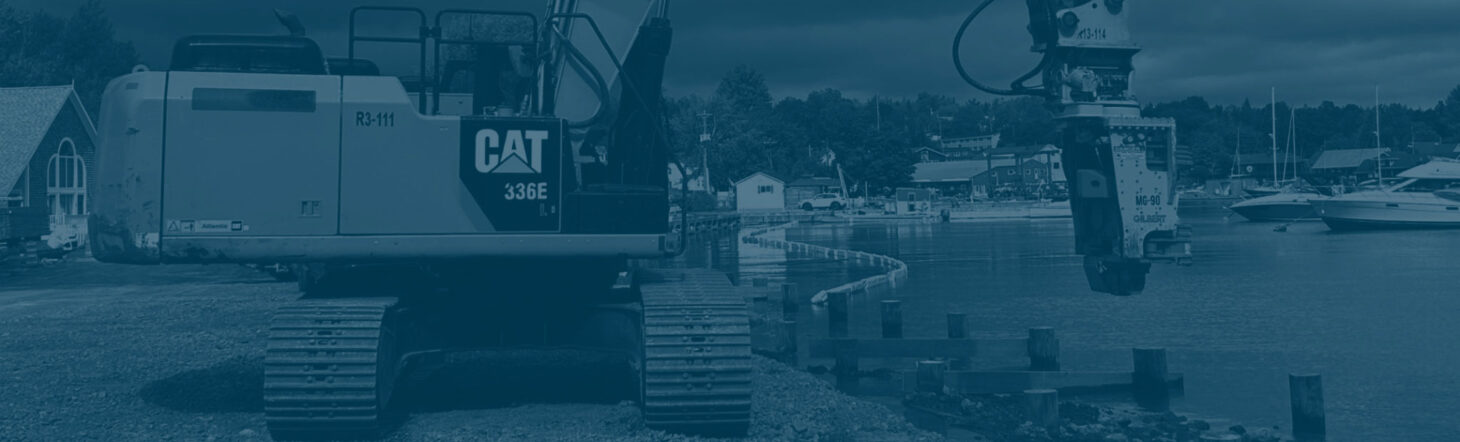

Lost time can be prevented by properly planning the project, having the recommended parts on site, and scheduling sufficient time for inspections and maintenance on the equipment
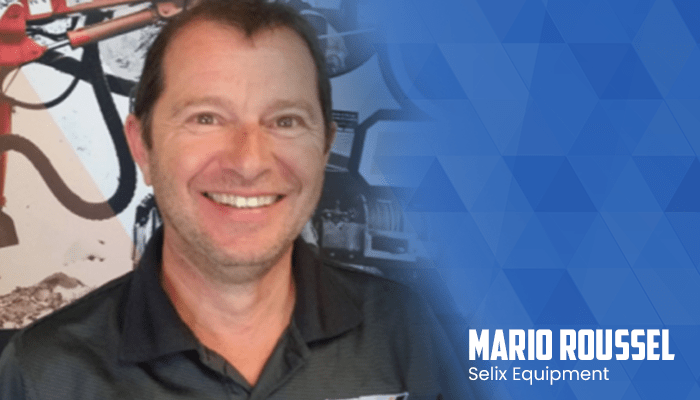
Mario Roussel, Selix Equipment Describe your current job.My day-to-day job is to organize everything with suppliers and manufactures for all the equipment brands we represent and make sure all financial aspects of the company are in order. What are your areas of responsibility?Sales would be my major responsibility, but I oversee almost everything to be sure we do the best possible jobs for our customers in a timely fashion. How did you get to where you are now?I started renting and selling heavy equipment back in 1985 for McIntosh Equipment of Ottawa, then I represented Holder of North America, a German municipal tractor company covering all of Canada and approximately 23 states. I was working with a dealer network, and then I started developing a liking to the rock breaking and drilling industry. In 1992, I helped develop and introduce a new Japanese hydraulic rock drill brand, called Furukawa, to our country for almost 20 years. In the summer of 2011, I took the opportunity to start my own distributorship, and Selix was born.
Failure to take reasonable safety precautions and provide adequate training can result in hefty fines By Kirk A. Vilks, Fillmore Riley LLP In the Q4 2013 edition of Piling Canada, James Wishart wrote about the Ontario Court of Appeal decision in R. v. Metron Construction Corp. (Metron). In that case, the Ontario Court of Appeal handed out fines to corporate defendants for criminal negligence that were large enough to potentially bankrupt the companies. It was held that that the courts should not take companies' financial situation into account when determining fines for criminal negligence. More recently, Canadian courts have continued to follow this approach by awarding large fines without consideration of the financial implications for the companies In 2013, the Ontario Court of Justice convicted Sunrise Propane Energy Group Inc. for multiple regulatory offences under the Ontario Environmental Protection Act (EPA) and Occupational Health and Safety Act (OHSA). The judgement - R. v. Sunrise Propane Energy, 2016 CarswellOnt 3399 - pertained to an incident that caused propane explosions in Toronto in 2008 that killed a young worker and caused a fire. There were a series of explosions that caused extensive damage to surrounding properties and injuries to neighbours. Some surrounding homes were left uninhabitable for over a year. Approximately 12,000 residents had to evacuate the area within a 1.6-kilometre radius. Local businesses were forced to close, and one nearby car dealership was completely destroyed. At the time of the explosion, there were two employees on site; one was able to escape with minor injuries, but the other was killed.
Piling Broker bridging the need to buy and sell equipment
How to manage a safe and efficient worksite By Deb Smith Safety is a core value for every construction project, woven into most construction companies' DNA. Yet carrying out a comprehensive safety plan can be a complex and time-consuming process. In response, CorePoint Solutions Inc. developed an innovative, easy-to-use and highly configurable safety software program that ensures compliance and convenience for companies of all sizes and employees at all levels. “Our company has been in business for 15 years,” said Lisa Heitrich, CEO and product manager at CorePoint. “It all started in B.C. when I was working with one of the top five global forestry companies.” To better handle safety, in 2003, Heitrich developed a solution for the forestry giant. With the new safety software's success, Heitrich received permission to develop a comprehensive solution to improve and better manage health and safety programs for other forestry companies and in other industries. e result was a suite of user-friendly and reliable occupational health and safety (OHS) management software.
Le Monde International is a new player on the Canadian piling scene
Diversification sees company through downturn of traditional market
A driven pile is a tested pile
ECA provides innovative equipment solutions for Walsh Construction
Prestigious condo project for deep foundations contractors inc.
Doublestar Drilling was awarded the temporary shoring contract for the construction and excavation for Calgary's largest upscale condo project

When leaving for work each morning, we often don't think about our safety
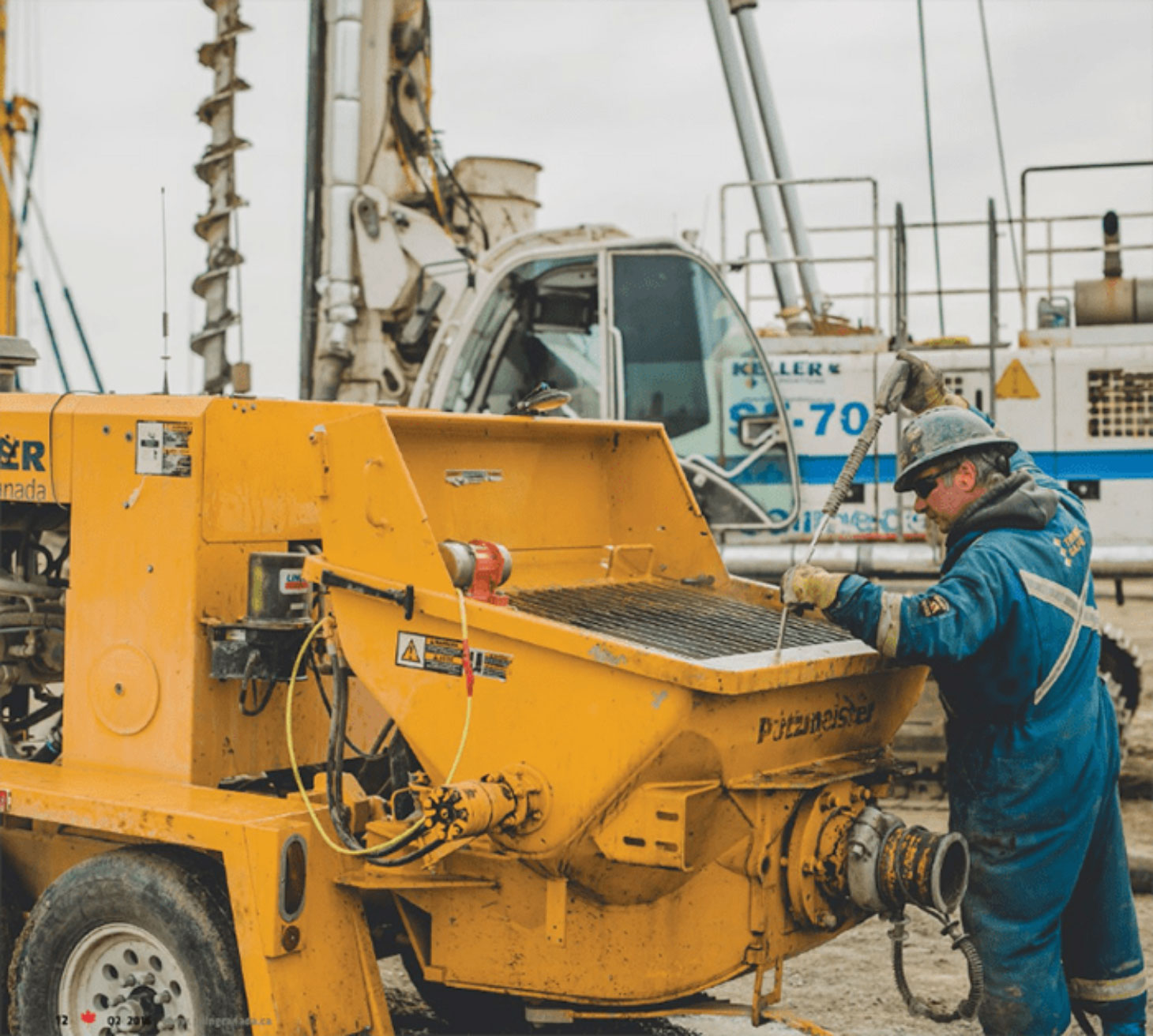
Best safety practices for deep foundation construction sites
PDI revamps the hardware and software for their Standard Penetration Test analyzing package
Dieseko Group, producer and supplier of hydraulic vibratory hammers and other foundation equipment, acquires Woltman Piling Equipment, a company located in Giessenburg, Netherlands. Woltman is market leader and producer and supplier of piling equipment. By means of the acquisition, both companies can combine forces and achieve economies of scale, for example by joint purchasing. Clients will benefit from shorter delivery times and new innovations. “The acquisition of Woltman seamlessly fits into our policy. We strive for market leadership for vibratory hammers and want to be the supplier for complete product packages for piling contractors,” said Ton Kraak, CEO of Dieseko Group. “We know Woltman very well as our subsidiary PVE Piling & Drilling Rigs - which was acquired by Dieseko Group in 2014 - has been working together closely with them for several years.” Woltman Piling Equipment will operate as an independent business unit of Dieseko Group in the Benelux region. All employees will remain working within the organization. {fastsocialshare}
Precast concrete industry is pleased to announce the release of EPDs in three key precast concrete product categories.
Held in Mississauga, Ont., June 15 to 17 at the Hilton Toronto Airport Hotel & Suites
This collaborative effort will help meet the growing ground engineering and foundation construction demands throughout Canada
Relief from strict compliance with timelines under builders' liens legislation By Jason E. Roberts, Fillmore Riley With limited exceptions, those who are unpaid for the performance of work, provision of services or delivery of materials to a construction project have the right to register a builder's lien against the legal title of the owner of the land on which the work, services or materials were performed, supplied or delivered. Typically, the lien is registered for the value of the unpaid work, services or materials. Once the lien is proved, the lien claimant may take steps to sell the owner's interest in the land in order to be paid. The provincial builders' liens statutes set out rigid timelines for filing the liens, as well as filing actions to prove the liens, and registering certificates of pending litigation (“CPLs”) against title to the affected land. The rationale for rigid timelines is that the timely administration of the construction lien process provides certainty for lenders who are financing the project, as well as subsequent purchasers of the property, all of whom rely on the accuracy of title information when advancing funds or closing a purchase. For this reason, courts have typically taken a hard line when it comes to compliance with the statutorily imposed timelines. However, two recent decisions from the Alberta courts suggest that strict compliance with these timelines can sometimes be avoided.