

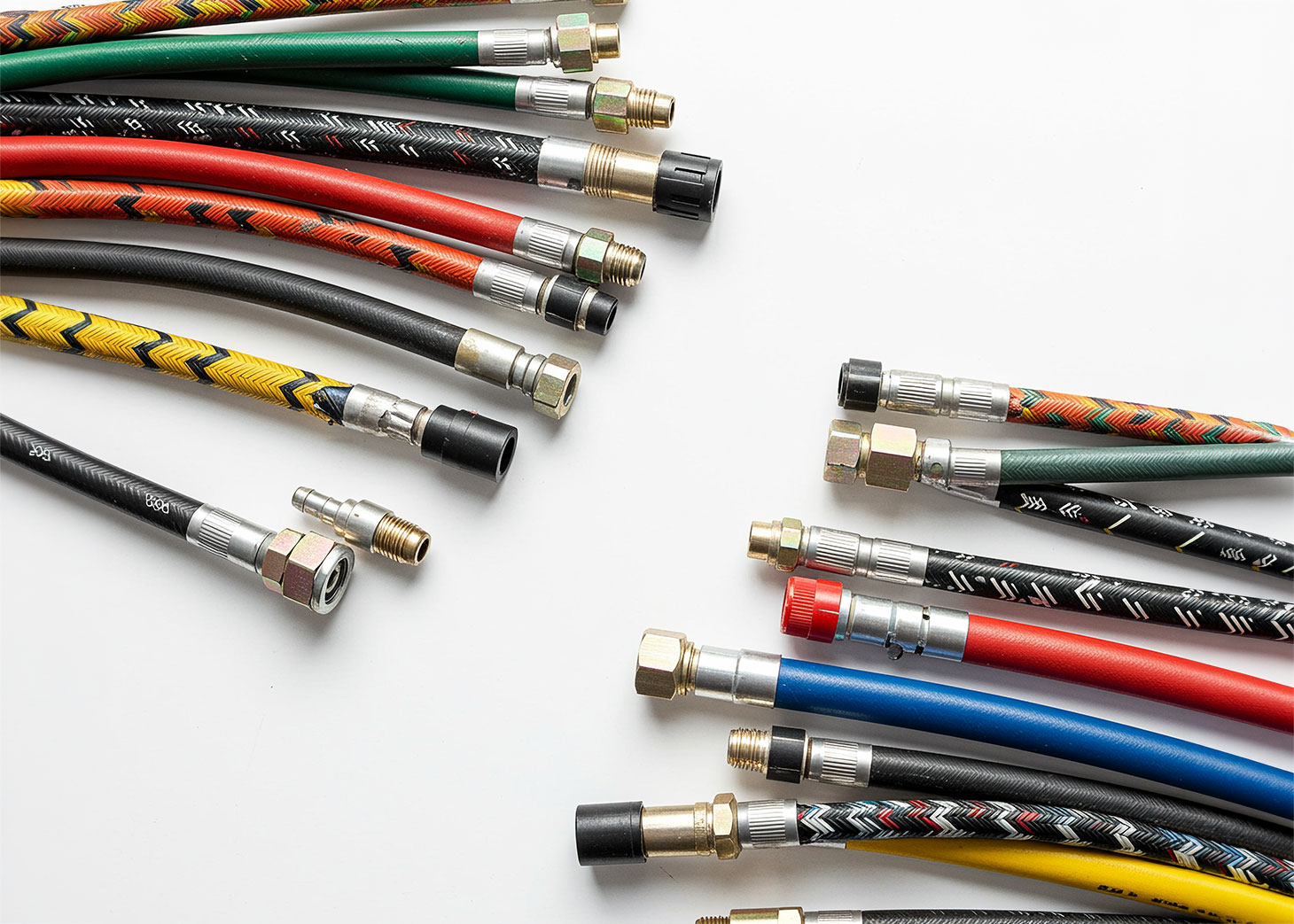
Hydraulic hoses may be small compared with the heavy equipment they help power, but their failure can bring a piling rig, excavator or other critical piece of equipment to an immediate standstill.
For contractors working on deep foundations projects, where equipment is often operating under demanding conditions and far from a repair facility, a failed hose can mean more than a quick repair. It can lead to lost production, schedule delays and unexpected costs. That’s why regular inspection, proper hose selection and preventive replacement should be key parts of any equipment maintenance program, says Brent Stone, vice-president and general manager of Whitby, Ont. based National Hose & Equipment.
“Any time you can incorporate a preventative maintenance or replacement program, it’ll keep you running more often,” Stone said.
Regular inspections can prevent costly failures
One of the most important parts of any maintenance, repair and overhaul (MRO) program is the regular inspection of hydraulic hoses. While inspection frequency depends largely on how often a particular piece of equipment is used, Stone says a monthly inspection is appropriate in most cases.
He recommends incorporating hose inspections into a routine maintenance program and performing them when a machine’s parts are being greased or its filters are being changed. One of the most important things to look for is any exposure of the hose’s reinforcing structure, along with cuts or rips that expose the wires. If the wire becomes exposed, Stone says it is often only a matter of time before exterior elements cause the wire to rust and the hose to fail.
Know when to replace a hose
Even with regular maintenance, hydraulic hoses have a limited service life. Stone says hoses on equipment used every day are generally recommended for replacement within 12 to 24 months, even when there are no obvious signs of damage. Some software systems can track equipment use and help identify when hoses should be replaced, although the cost of these systems means they are not widely used by contractors.
Several factors can affect how long a hose lasts, including normal wear, temperature extremes, vibration, UV exposure, dust and debris. Heavy equipment used in deep foundation construction is often exposed to harsh conditions that can accelerate hose deterioration.

“Any time you can incorporate a preventative maintenance or replacement program, it’ll keep you running more often.”
Brent Stone, National Hose & Equipment
“In the environments that these heavy machines work in, there are often extreme temperatures that degrade the service life, while UV rays affect the covers and dust and debris get into the system’s oil supply from many different entry points,” Stone said.
He compares hydraulic hoses to the veins of a machine, with oil acting as its blood. “The hoses are like the veins, and the blood of the system is the oil, and it goes through filters, valves and cylinders,” Stone said. “But if the filters are clogged or not working as intended, all that debris and crap circulate through the system and is conveyed through your hoses and shortens the life of the hose.”
Cleanliness matters
Preventing contamination starts before a new hose is installed. Manufacturers, hose and fitting distributors and shops should ensure hydraulic hose assemblies are properly cleaned after they are cut and crimped. Stone says assemblies should meet ISO cleanliness levels before being installed.
“It’s extremely important and way underestimated by a lot of people,” Stone said of ensuring the inner workings of a hose are free of contamination before installation. He cautions contractors that simply using compressed air to clean a hose after it has been cut is not enough to remove contamination. “Be aware of distributors or hydraulic hose repair shops that make up hydraulic hose. Most just use compressed air with a blowgun to clean the hose after they cut it. And even less do anything after it’s been crimped.
Data shows it does almost nothing to clean out the hose with compressed air,” Stone said. Instead, he recommends using a pellet cleaning system. The process essentially scrapes the inside of the hose to remove debris that may remain or become trapped inside, helping the assembly meet the required cleanliness levels. For contractors, this makes it important to consider cleanliness when sourcing replacement hoses and assemblies, not just the hose’s pressure and temperature ratings.
Choosing the right hose
With numerous hydraulic hose types available, selecting the right product for a specific application can be challenging. Stone recommends using the STAMPED checklist to determine the safest and most effective hose for an application. The acronym stands for Size, Temperature, Application, Material/Media, Pressure/Impulse rating, Ends and Delivery.
“Those questions, whether they’re asked in that specific manner or not, have to be asked in order to hone in on the right type of product to offer,” he said. “That’s always key, no question.”
Climate is another key consideration when selecting a hydraulic hose. This is particularly important for Canadian contractors, as equipment may be exposed to extreme winter temperatures, with some regions experiencing temperatures below negative 50 degrees Celsius.
Stone notes that contractors should consider an Arctic-rated hose for equipment that may operate in severe cold. “If you try to put a standard hydraulic hose in those extreme temperature situations, hot or cold, they will likely fail prematurely,” he added.
Don’t downgrade a replacement
One of the most common mistakes Stone has seen during his decades in the business is contractors rushing to the nearest repair facility when a hose fails without confirming that the replacement matches the original hose. A repair facility may not have the same pressure rating or style of hose that was originally installed on the machine and may provide a lower-rated alternative.
“The idea is you want to replace it with the correct type of hose that was originally on the machine,” Stone said. “If you don’t do that and you replace it with something other than that, the next time it goes to get replaced or repaired, somebody’s going to do the same thing again, and so you continue repeating that particular issue.”
To avoid this, equipment owners and operators should make sure any identifying label on a hose remains intact. This information can help a repair facility determine the appropriate replacement. If the original hose is unavailable, Stone recommends moving up to a higher-rated hose rather than selecting one rated below the requirements of the application. A higher-rated hose can create challenges with routing and may add cost, but using a hose with insufficient pressure or impulse ratings can result in premature failure.
Avoid installation mistakes
Choosing the correct hose is only part of the equation. Installation can also affect service life. One common mistake is over-tightening hose ends. Some installers assume a swivel nut should cover all the threads on the male threaded end, but that is not always the case.
“The thinking is the tighter, the better,” Stone said. “That’s not necessarily the case and can lead to premature hose failure because the fittings could break or the nuts could crack.”
Several factors can affect how long a hose lasts, including normal wear, temperature extremes, vibration, UV exposure, dust and debris. Heavy equipment used in deep foundation construction is often exposed to harsh conditions that can accelerate hose deterioration.
Hose length is another consideration. If a replacement hose is too short, the wires inside the hose can be bent more tightly than intended, shortening its service life. If it is too long, it can become pinched or caught in moving parts. When replacing a hose, contractors should also match the replacement’s specifications, including pressure rating, temperature range and fluid compatibility, to the application.
Pressure ratings deserve particular attention. Two hoses may both have a working pressure rating of 5,000 psi but have significantly different impulse ratings. Stone notes that one hose could be rated for 200,000 cycles while another could be rated for one million cycles. For equipment exposed to frequent movement and vibration, that difference can be significant.
Protect hoses from harsh conditions
Deep foundations equipment operates in environments where hoses can be exposed to abrasion, vibration and pinch points. Additional protection can help extend hose life. Contractors can select hoses with built-in abrasion resistant covers made with materials such as UHMWPE or add protective products such as plastic spiral wrap or nylon sleeving. Bundling hoses together can also provide additional protection while helping to organize hose routing.
Stone notes that many protective wraps and sleeves can be reused when a hose is replaced, provided they remain in good condition. This can reduce waste and eliminate the need to replace the protective covering every time a hose is changed.
Safety beyond the equipment
A failed hydraulic hose does more than threaten equipment reliability. It can pose a serious safety risk to workers. Hydraulic injection injuries can occur when pressurized hydraulic fluid escapes through a small opening and penetrates the skin. These injuries can cause serious tissue damage and require immediate medical attention.
Stone says the risk has prompted more companies and original equipment manufacturers to invest in protective products such as exterior sleeving with Kevlar lining. For deep foundations contractors, hose protection should therefore be viewed as both an equipment reliability measure and an important part of jobsite safety.
Technology is improving hose life
Stone is the third generation of his family to work at National Hose & Equipment, which serves customers across Canada. During his 33 years in the industry, he has seen hydraulic hose technology evolve in ways that have improved equipment reliability and reduced maintenance requirements. These developments include more compact hybrid hoses that use less rubber, offer greater flexibility and allow tighter bends. Abrasion-resistant cover materials have also helped extend hose life.
Asset-tracking technology can now allow hoses to be tracked from “cradle to grave” and flag when they need to be repaired or replaced. Despite these advances, Stone says contractors do not necessarily need to wait for the next major technological breakthrough to improve hose reliability. Instead, he believes the industry should focus on getting the fundamentals right: selecting the correct hose, installing it properly, keeping hydraulic systems clean, protecting hoses from damage and replacing them before they fail.
“I haven’t heard or seen anything coming up that is a game-changer or will add value,” he said. “I think it has been and always will be a mix of doing the things that are already there but applying them properly.”
For deep foundation contractors, that means taking a proactive approach to hydraulic hose maintenance. Regular inspections, proper selection and installation, contamination control and adequate protection can all help reduce unexpected failures and keep critical equipment working when it matters most.