

Canada’s construction and infrastructure sectors have heard major funding announcements before. What makes the newly announced Canada Strong Fund different, according to the Association of Consulting Engineering Companies – Canada (ACEC-Canada), is not simply the size of the investment, but the possibility that it could fundamentally reshape how the country plans, finances, and delivers nation-building infrastructure.
Recently announced by Prime Minister Mark Carney, the Canada Strong Fund is a $25-billion national investment vehicle intended to support strategic projects tied to economic growth, trade, energy security, critical minerals, and transportation infrastructure. Unlike traditional grant programs, the fund has been positioned as Canada’s first sovereign wealth-style investment mechanism to attract private capital alongside public investment.
The new fund has significant implications for the deep foundations industry. Ports, trade corridors, energy transmission systems, mines, industrial facilities, bridges and marine terminals all depend on geotechnical reviews, subsurface engineering, and complex foundation systems before construction begins.
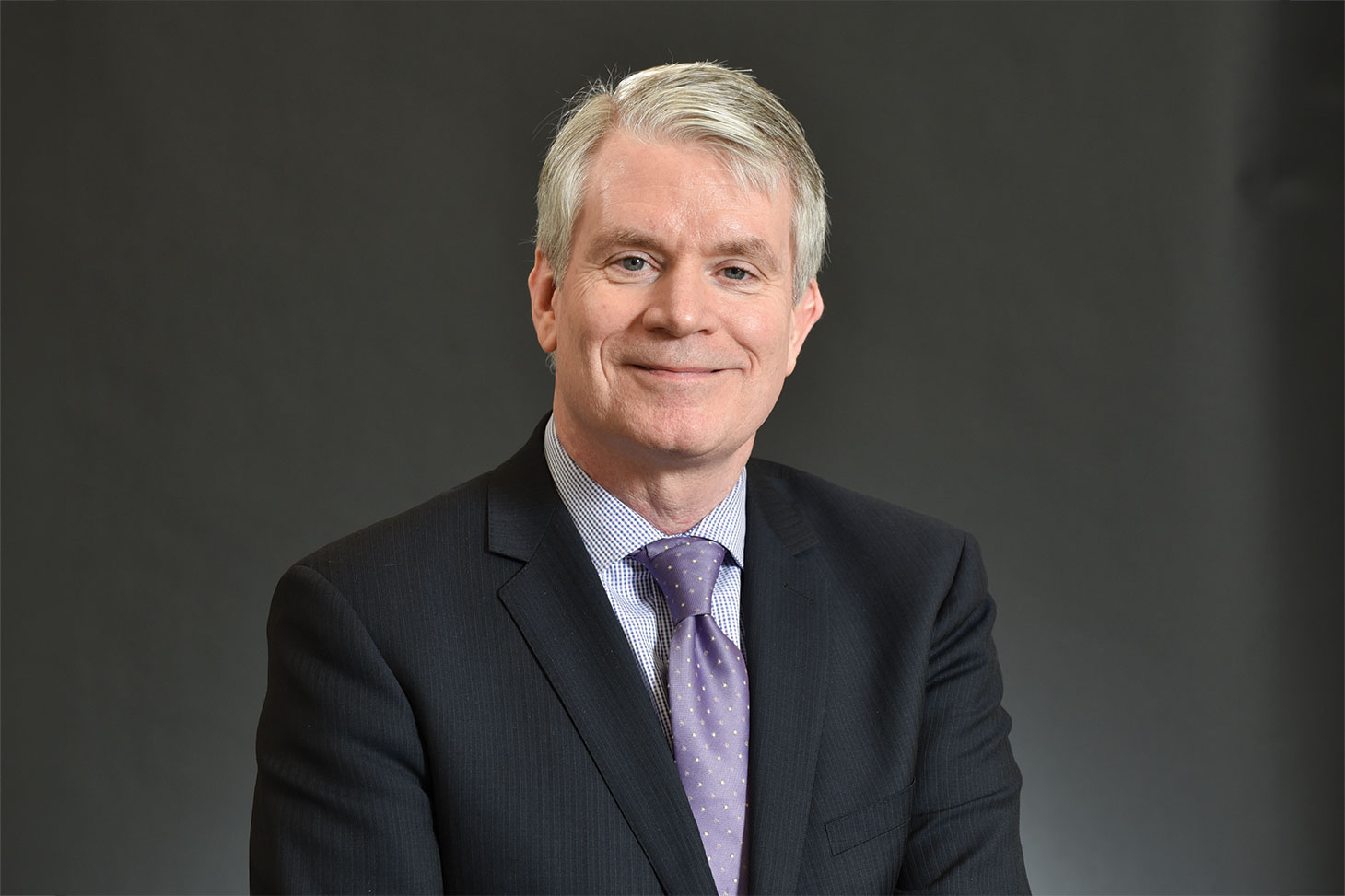
John Gamble, president and CEO of ACEC-Canada, said the Canada Strong Fund differs from previous federal programs in two key ways. First, it is intended to operate as a long-term investment vehicle rather than a conventional grant fund. Second, it is explicitly tied to a broader nation-building agenda focused on strategic economic infrastructure. “The opportunity is not just the amount of capital,” he said. “The opportunity is whether this fund helps bring more discipline, predictability and long-term thinking to how Canada plans, approves, procures and delivers major infrastructure.”
This is an important distinction because major projects often require years of planning, environmental assessment, geotechnical analysis, procurement coordination, and stakeholder engagement before construction can begin. Although the federal government has not released a final project list or investment framework, ACEC-Canada expects the fund to focus heavily on projects linked to trade, energy, transportation, resource development, and economic competitiveness.
“The earlier consulting engineering firms are engaged, the better the chance of reducing risk, avoiding redesign, improving constructability and protecting public value.”
John Gamble, president and CEO of ACEC-Canada
Potential projects could include marine and port infrastructure, trade corridors and intermodal transportation facilities, remote and northern access infrastructure, mining and critical minerals developments, transmission systems, industrial and manufacturing facilities, energy generation and storage systems, as well as telecommunications and digital infrastructure.
For the deep foundations industry, nearly all of those project categories involve significant geotechnical and structural complexity. “These are not areas where Canada can afford shortcuts,” said Gamble. This could create significant opportunities for piling contractors, drilling specialists, geotechnical engineers, marine foundation suppliers, steel manufacturers, and heavy equipment providers across Canada.
ACEC-Canada views the Canada Strong Fund as part of a broader shift toward what Gamble describes as “nation building in a modern sense.” Canada is facing mounting pressures related to trade diversification, supply-chain security, critical minerals development, Arctic sovereignty, climate resilience, energy security, and housing growth. The infrastructure required to respond to those challenges is increasingly large-scale, technically complex and interconnected.
“What is different today is the context,” Gamble said. “It is not just about building large assets. It is about building the physical, economic and strategic capacity Canada needs to compete in a more uncertain world.” That vision aligns closely with sectors already seeing increased investment activity, including ports, marine terminals, renewable energy projects, LNG facilities, transmission corridors, and critical minerals development in northern regions.
One of ACEC-Canada’s central messages is that successful infrastructure delivery begins well before procurement and construction. Engineering teams are typically responsible for determining whether a project is technically feasible, environmentally responsible, financially credible and realistically deliverable. That work can include geotechnical investigations, feasibility studies, environmental assessments, constructability reviews, lifecycle analysis, permitting support, climate resilience evaluation, cost estimating, risk assessment and support for Indigenous and community engagement.
“The earlier consulting engineering firms are engaged,” Gamble explained, “the better the chance of reducing risk, avoiding redesign, improving constructability and protecting public value.”
“A stop-start approach makes capacity problems worse.”
John Gamble, president and CEO of ACEC-Canada
The scale and complexity of projects anticipated under the Canada Strong Fund may also accelerate changes in how projects are procured and delivered. Traditional design-bid-build models remain appropriate for lower risk projects with well-defined scopes and predictable site conditions. However, Gamble says many nation-building projects now involve too many unknowns, particularly in marine, remote, or subsurface environments, for traditional procurement approaches.
As a result, the industry may see greater use of progressive design-build, alliance contracting, integrated project delivery and other partnership-based procurement models that bring owners, consulting engineering firms, contractors and project partners together much earlier in the process. “These approaches allow the team to better define scope, understand risks, test design options, improve constructability and develop more reliable cost estimates,” Gamble said. For deep foundation contractors, that earlier collaboration could improve planning around equipment mobilization, sequencing, marine access, material supply and geotechnical risk allocation.
Although the Canada Strong Fund could unlock significant infrastructure activity, Gamble warns that Canada’s delivery systems are already under strain. “If multiple major projects advance at once, Canada could face bottlenecks in consulting engineering capacity, skilled trades, specialized geotechnical and foundation equipment, steel, cement, electrical equipment, transformers, permitting capacity, Indigenous consultation capacity, owner-side project management capacity and regulatory review resources,” he said.
The piling and deep foundations sector is especially sensitive to those constraints. Large marine and infrastructure projects often compete for specialized drill rigs, pile driving equipment, heavy cranes, marine barges, structural steel, skilled operators, geotechnical expertise, and foundation subcontractors. If multiple mega-projects move forward simultaneously, competition for resources could quickly intensify.
Gamble adds that one of Canada’s biggest infrastructure bottlenecks is the time and complexity involved in moving projects from concept to construction. ACEC-Canada supports the federal government’s “one project, one approval” concept and recent efforts to improve coordination between federal and provincial regulators. However, Gamble emphasizes that approvals reform must still maintain environmental rigour and public confidence.
“The Canada Strong Fund should be judged not only by how much money it deploys, but by whether it helps Canada deliver the right projects in the right way.”
John Gamble, president and CEO of ACEC-Canada
“Approvals reform is not about cutting corners,” he said. “It is about avoiding duplication, improving coordination, applying mature science and engineering knowledge and moving well-understood project types through the system more efficiently.” That balance will be especially important for projects involving marine environments, Indigenous consultation or climate-sensitive regions.
For suppliers and contractors, one of the most important outcomes of the Canada Strong Fund could be the creation of a more predictable long-term project pipeline. “A stop-start approach makes capacity problems worse,” Gamble said. “Consulting engineering firms, contractors, suppliers, equipment providers, training institutions and workers can plan and invest with more confidence when they know there is a credible long-term pipeline of work.”
That predictability may encourage investment in new piling and drilling equipment, fabrication facilities, workforce training, geotechnical capacity, domestic steel supply, and marine construction capability. For deep foundation companies, longer-term certainty could improve decisions around hiring, fleet expansion and succession planning.
While ACEC-Canada welcomed the Canada Strong Fund announcement, the organization also stressed that the fund’s success will ultimately depend on discipline and execution. “The Canada Strong Fund should be judged not only by how much money it deploys,” Gamble said, “but by whether it helps Canada deliver the right projects in the right way.” He adds that successful implementation will require clear project selection criteria, strong owner-side expertise, meaningful Indigenous and community engagement, streamlined but credible approvals, procurement models that reward qualifications and lifecycle value, realistic risk allocation, and sustained workforce and supply-chain planning.
Many details surrounding the Canada Strong Fund still remain under development, including governance structures, investment frameworks and procurement pathways. But within the consulting engineering community, the announcement is already being viewed as a potentially significant shift in how Canada approaches strategic infrastructure.
“Canada does not simply need more announcements,” Gamble said. “It needs a disciplined, collaborative and technically sound approach to turning national ambition into infrastructure that performs.”